
After the Break
This months What’s Up.
Presented by Martin Baker.
.
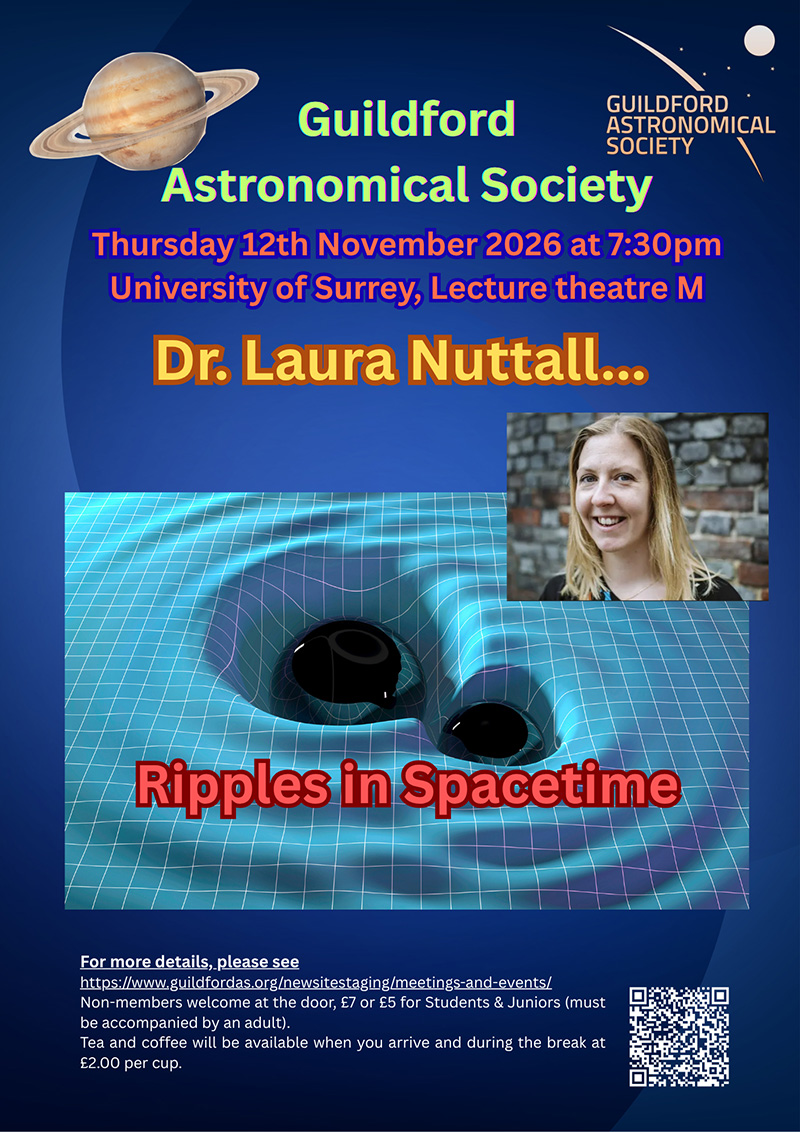
Our meetings are held at Surrey University, they will also be streamed to members via Zoom.
Lecture Theatre M
Joining details for Zoom of each meeting will be sent out to members prior to each talk.
If you are interested in becoming a member, contact us to find out more.
If you are not sure whether you want to join right away, you can come along to a meeting as a Visitor.
We charge just £7 (£5 Junior/Student guest).
On arrival, please introduce yourself to the Membership Secretary. You will be warmly welcomed.
Surrey University map
Use the Main Car Park at grid refs D1,E1. Free during the evening from 7pm.
The Lecture Theatre Block is at D3 (#23)
(The image links to Surrey University website Campus Map)
Use the Stag Hill Campus map

Our Speakers This Year
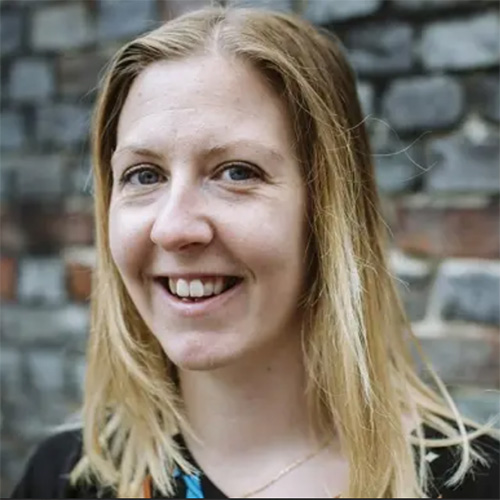
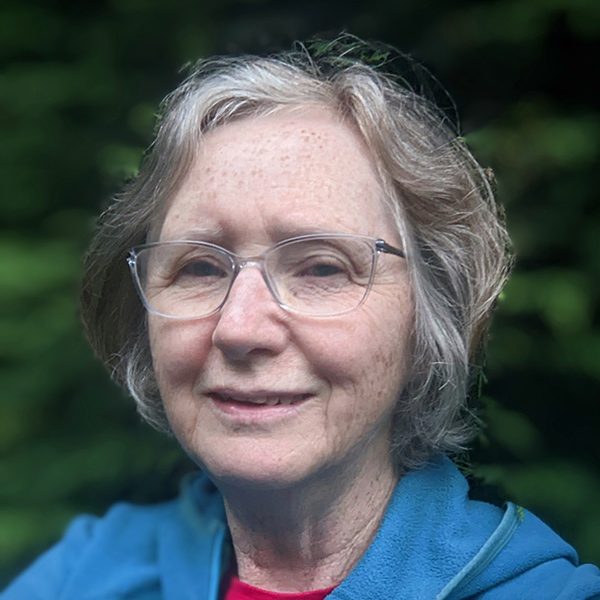
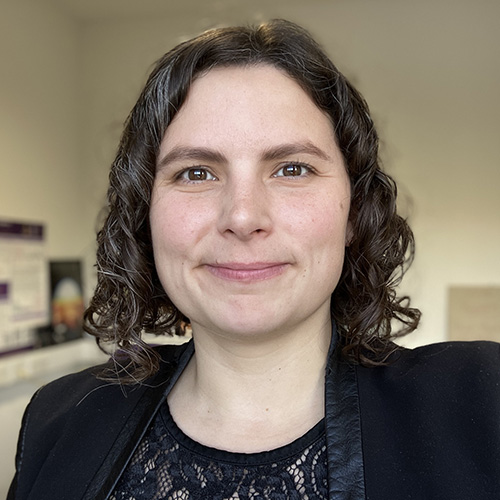
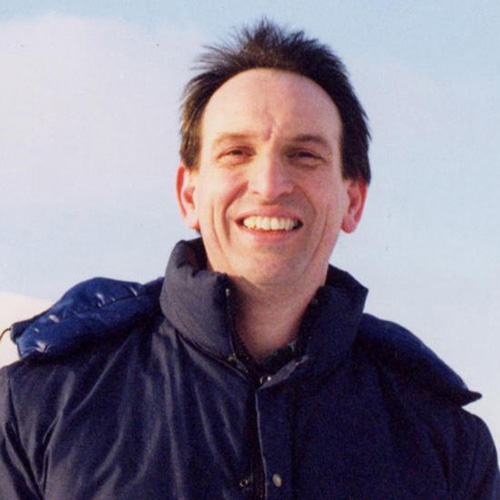
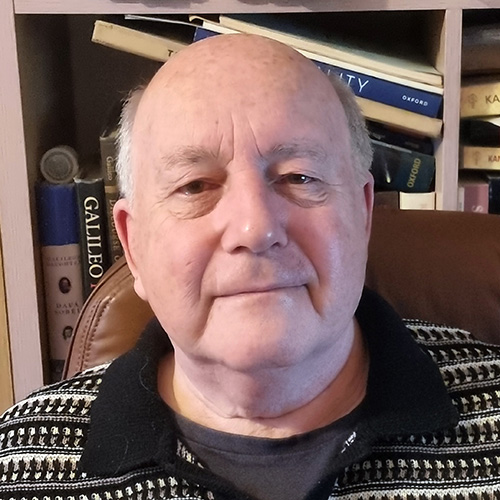
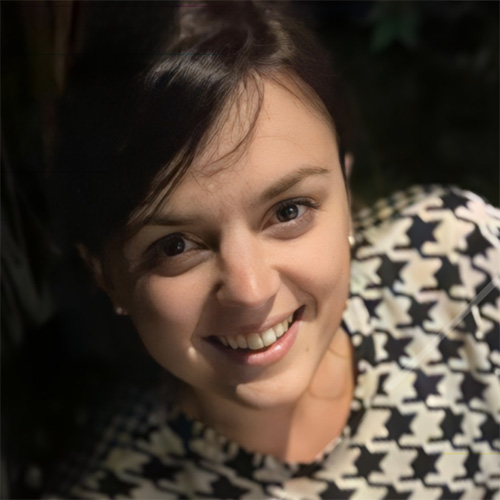
We do not know yet if there is intelligent life in the universe, though opinions across scientific communities are mixed. There is no proof, but the universe has trillions of planets, which makes some scientists think it is possible.The Drake Equation is a mathematical formula used to estimate the number of active, communicative alien civilizations in our Milky Way galaxy. Written by astronomer Frank Drake in 1961, it serves as a framework for the scientific search for intelligent life rather than a tool for a precise final answer.
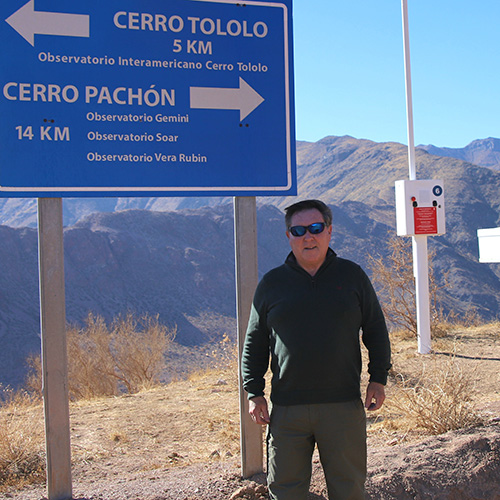
“Martin Griffiths is an enthusiastic science communicator, writer and professional astronomer. He is a recipient of the Astrobiology Society of Britain’s Public Outreach Award (2008) and the Astronomical League’s Outreach Master Award (2010). He also holds the League’s Master Observer certificate and has written or contributed to over 100 published science articles for many journals. He is the author of seven books covering various aspects of astronomical observing.
He was one of the founder members of NASA’s Astrobiology Institute Science Communication Group and also managed a multi-million pound European programme in Astrobiology for adult learners across Wales. He has been involved in promoting adult education by teaching courses at Swansea and Cardiff Universities and after spending 17 years as a lecturer at the University of South Wales he is now Director of the Brecon Beacons Observatory and a science presenter and consultant for Dark Sky Wales.
Martin is a Dark Sky Ambassador for the Brecon Beacons National Park, Staff trainer for Dark Sky Ambassadors at the BBNP, a committee member of the International Dark Sky Reserve Steering Groups of Snowdonia and Brecon Beacons National Parks and a consultant to the Welsh Government on dark sky issues. He is also a local representative for the BAA Commission for Dark Skies.
Martin is a Fellow of the Royal Astronomical Society; a Fellow of the Higher Education Academy; a member of the Welsh Academy and is also a member of the Astrobiology Society of Britain; the European Society for the History of Science: the British Astronomical Association; the British Science Association; the Webb Deep-Sky Society; the Society for Popular Astronomy and the Astronomical League” .
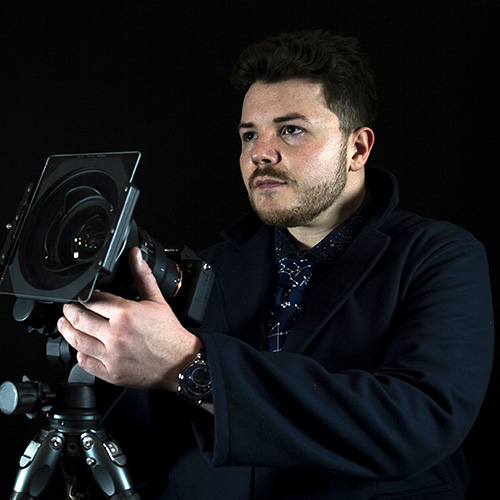
In light of Artificial Light at Night, Mega Constellations and Mirror Technology, Josh using the convention of the camera visualises our changing world at night; from our window to the universe, nocturnal fauna and deep heritage connection to the night.
Josh Dury Photo-Media AKA ‘Starman’ (B.A. FRAS), is an Internationally Acclaimed, Award-Winning Landscape Astrophotographer, Presenter, Speaker, Best-Selling Author and Writer from The Mendip Hills AONB in Somerset, United Kingdom. His images have received notable endorsements, including NASA + Buzz Aldrin, the last living APOLLO 11 Astronaut. Further accolades include: The European Space Agency (ESA) + British Astronaut – Tim Peake, The World At Night (TWAN), PPOD, BBC & CBS amongst others. He also acts as a Delegate of Dark Sky International for Bristol, UK.
LISA: unlocking the micro-milli Hz part of the gravitational wave spectrum
Gravitational waves are ripples in the fabric of spacetime, which are caused when massive objects move through space. They were detected for the first time in 2015 by LIGO, a ground based gravitational-wave detector, from the collision of two black holes. Since then, LIGO has detected close to 400 gravitational waves from merging black holes and neutron stars. LIGO probes the Hz-kHz part of the gravitational waves spectrum and as such measures gravitational waves from objects that are roughly the same mass as the sun (i.e. stellar mass). A new space detector called LISA will launch in 2035 which will look at the micro-milli Hz part of the gravitational wave spectrum. In this part of the spectrum LISA will be able to hear, for example, the collisions of supermassive black holes and what happens when stellar mass black holes are swallowed by supermassive black holes. In this talk I will introduce gravitational waves and briefly discuss LIGO. The majority of the talk will discuss how LISA works, the sources LISA will go after and what we can learn by unlocking this part of the gravitational wave spectrum.
I received an MPhys in Physics, Astrophysics and Cosmology from Lancaster University in 2009, as well as the chancellor’s medal. I then moved to Cardiff University to study gravitational waves and work in the LIGO Scientific Collaboration. My graduate research focussed on electromagnetic follow-up of gravitational-wave events; I received my PhD in 2013. I then moved to the University of Wisconsin-Milwaukee where my research diversified to characterising the Advanced LIGO detectors. In 2015 I continued my doctoral research at Syracuse University, researching the application of data quality to the search for gravitational waves from the merger of compact objects. In 2017 I returned to Cardiff University as a Sêr Cymru MSCA COFUND Fellow. I then moved to the ICG as a senior lecturer in August 2018 to start a gravitational-wave research group with Andy Lundgren and Ian Harry. I was awarded a UKRI Future Leaders Fellowship in October 2020 and became a Reader of Astrophysics in September 2021.
A planetary nebula is a glowing shell of gas and dust ejected by a dying intermediate-mass star. Despite the name, they have no relation to planets; early astronomers thought they looked like gas giant planets through small telescopes. Our Sun will form one in billions of years.
Space telescopes find and study exoplanets (planets outside our solar system) by watching how they block starlight and by analyzing their atmospheres.
Dr Hannah Wakeford is an Associate Professor in Astrophysics at the University of Bristol and uses space telescopes like Hubble and JWST to measure the atmospheres of alien worlds. She is particularly interested in their aerosols.
Space debris, or “space junk,” consists of defunct satellites, spent rocket stages, and millions of tiny fragmentation pieces orbiting Earth at extreme speeds. It threatens operational infrastructure like GPS and weather satellites and risks triggering a cascading collision chain reaction known as the Kessler Syndrome, which could render Earth’s orbits unusable.
“Michael Lockwood is a physicist who has made major advances in the study of the Earth’s atmosphere and its interaction with the Sun’s magnetic field. He discovered that the level of magnetism and energy from the Sun are correlated, and that the magnetism more than doubled in the 1900s. His findings are key for climate change studies.
Michael is also distinguished for his use of spacecraft to investigate the flow of particles from one part of the atmosphere into another — the ionosphere (the upper part that can be ionised by the Sun) into the magnetosphere (the Earth’s magnetic field). His work allows the prediction of atmospheric behaviour.
He has openly criticised those in the scientific field who do not see the need for human action against climate change. He has published several hundred papers, notably in 2007 in Proceedings of the Royal Society A, on solar data over the last 40 years. He is Professor of Space Environment Physics at the University of Reading.”
“By the mid-18th century, astronomers had a pretty good idea of the scale of the solar system, at least proportionally. Still needed was an absolute measurement of planetary distances. Thanks to Kepler’s 3rd Law (a simple equation relating orbital periods to a planet’s distance from the Sun) a mathematical means was already available to achieve this. All it lacked was a single accurate measurement – such as the solar parallax determined by a transiting inferior planet.
A rare such opportunity was to occur in 1761 when Venus was set to transit the face of the Sun in June of that year. As part of a worldwide international effort comprised of about 120 observers, the French contribution fell to a minor French nobleman working at the Paris Observatory. The subsequent adventures of Guillaume Le Gentil led him to unarguably becoming the most tragi-comic hero in the history of astronomy.”
“Steve became fascinated by astronomy at the age of nine, and never really grew up. During the ensuing acquisition of steadily larger instruments, Steve has always been interested in the technical enhancement of telescopic observation; this has included the enhancement of planetary detail through use of Kodak’s Wratten filters and (during those halcyon days prior to digital cameras!) use of specialised Kodak celluloid films for infra-red, ultra-violet and micrographic (high resolution) imaging.
In parallel with his interests in practical astronomy there runs a fascination with astronomy’s history – which has included an RAS published study of Galilean observations using an optical replica of Galileo’s third instrument. A stronger thread is an enjoyment of astronomy’s quirkier stories and many pratfalls with which the science is littered.
Steve has been writing published work since he was 15, and has since written articles for the journals of both the BAA and RAS, New Scientist, Modern Astronomer, Quest, Astronomy magazine and Astronomy Now (for whom he is currently Equipment editor). ” .
“Euclid is designed to explore the evolution of the dark Universe. It is creating a 3D-map of the Universe (with time as the third dimension) by observing billions of galaxies out to 10 billion light-years, across more than a third of the sky.
While dark energy accelerates the expansion of the Universe and dark matter governs the growth of cosmic structures, scientists remain unsure about what dark energy and dark matter actually are.
By observing the Universe evolving over the past 10 billion years, Euclid is revealing how it has expanded and how structure has formed over cosmic history – and from this, astronomers can infer the properties of dark energy, dark matter and gravity, to reveal more about their precise nature.”
I always wanted to be a scientist, I’m fascinated by physics, machines, space, etc, was quite good at maths, and loved the idea of doing research. When I went to university in 1990 I was advised to do a maths or physics degree, and plumped for maths and astronomy as I found astronomy very interesting. After my degree, I decided to do a PhD in astronomy, as I had become more and more interested in astronomy during my degree. I found astronomy research to be incredibly rewarding. Towards the end of my PhD I was offered a postdoctoral research post at MSSL, and jumped at the chance. I took the lectureship because it is a permanent job, and should allow me to keep doing research for as long as I like. Currently, I spend a lot of my time doing research. I study supermassive black holes, the processes which take place around them and their history and role in shaping the Universe towards its present shape. I work mostly with satellite data taken from the XMM-Newton X-ray observatory but also travel to ground based observatories to take data. I spend much of my time analysing data from these observatories, and writing computer programs to help me analyse the data. I travel quite frequently to other Universities within the UK and abroad to present my research to other scientists, and to take part in several committees that are designing astronomical telescopes and satellites for the future. I frequently have to review and assess other scientists’ work and proposals. I also supervise undergraduate and PhD students who are undertaking research projects at MSSL. I lecture “High Energy Astrophysics” and “Cosmology and Extragalactic Astronomy” to students taking the UCL Diploma in Astronomy. This is a part time, evening course and it is really good to teach because the students are always full of enthusiasm.
“Unravelling the formation and evolution of galaxies is an active area of astrophysical research. How does the structure form, and what processes are most important in shaping galaxies as we see them today? One way to address this is to forensically analyse nearby galaxies, and determine how they have formed over the age of the Universe. This field is often referred to as ‘galactic archaeology’. Rather than trowels and brushes, our tools are large telescopes, and detailed numerical simulations. And the fossils we study are the individual stars within a given galaxy.
As we need to study the properties of individual stars to build up a galaxies formative history, we are limited in which objects we can study, they need to be near enough that we can take images and spectra of their stellar populations. Fortunately, our own local group provides tens of galaxies for which this data can be obtained. Here at Surrey, we are actively involved in a number of large scale surveys of nearby galaxies to address how they are formed.”
“He graduated in physics at the Moscow Institute of Physics and Technology (MIPT) and, in 2007, completed his doctoral thesis, “”Dynamics of dark matter in galactic centres””, at the Lebedev Physical Institute (LPI – Moscow, Russia) where he has been a researcher until 2015. He has also worked at the Laboratoire d’Astrophysique de Marseille (2010), at the Rochester Institute of Technology (2001-2012) and at the Rudolf Peierls Centre for Theoretical Physics at the University of Oxford (2015-2017). Since 2017, he has been a postdoctoral researcher at the Institute of Astronomy, University of Cambridge.
His work focuses on the field of galactic stellar dynamics. His research interests include: dynamical modelling (measuring the structure and mass distribution) of the Milky Way, its constituents such as globular clusters, and other galaxies in the Local Group and beyond, using a large inventory of methods (Schwarzschild’s orbit-superposition models, action-based distribution functions, Jeans equations, numerical simulations, etc.); structure and evolution of galactic nuclei, dynamics of stars around single and binary supermassive black holes; black hole feeding rates; and the analysis of large observational datasets, e.g. from the Gaia space mission.
He combines his research activity with teaching and public outreach. He also regularly participates in outreach activities such as the Science Festival in Cambridge, the Royal Society Exhibition in London, the Open Astronomy day in Ely and the public lectures at the Institute of Astronomy open evenings series.”
Dark matter is an invisible type of matter that does not emit, absorb, or reflect light. It makes up about 27% of the universe. We know it is there because its gravity pulls on stars and galaxies, acting like an invisible glue that stops them from flying apart.
“Maria Vincenzi is an Associate Professor of Astrophysics at the University of Oxford and a Fellow of Hertford College. She completed her PhD between the Institute of Cosmology and Gravitation in Portsmouth and the Physics and Astronomy Department at the University of Southampton. Following her PhD, she held a postdoctoral position at Duke University and was later awarded a NASA Einstein Fellowship.
Dr. Vincenzi’s research primarily focuses on measuring the expansion history of the Universe using Type Ia Supernovae. She led the SN cosmological analysis of the Dark Energy Survey and is now deeply involved in designing and planning the next generation of Type Ia Supernova cosmology experiments, particularly the Legacy Survey of Space and Time (LSST) at the Vera C. Rubin Observatory.”
Members Only AGM
AstroImaging Group Discussion Meetings via Zoom
GAS members only
We have an Astrobin group where some of our images an be seen.
(Opens a new window)
scroll down for the images.
AIG Meeting dates
September 14th 2026 – New season meeting with target challenge – SmartScope Shoot Out
19th October Software Updates & Shoot Out results
9th November
14th December
11th January 2027
8th February – Messier Marathon
8th March – with guest Charles Pevsner
12th April
10th May
14th June
No meetings in July or August